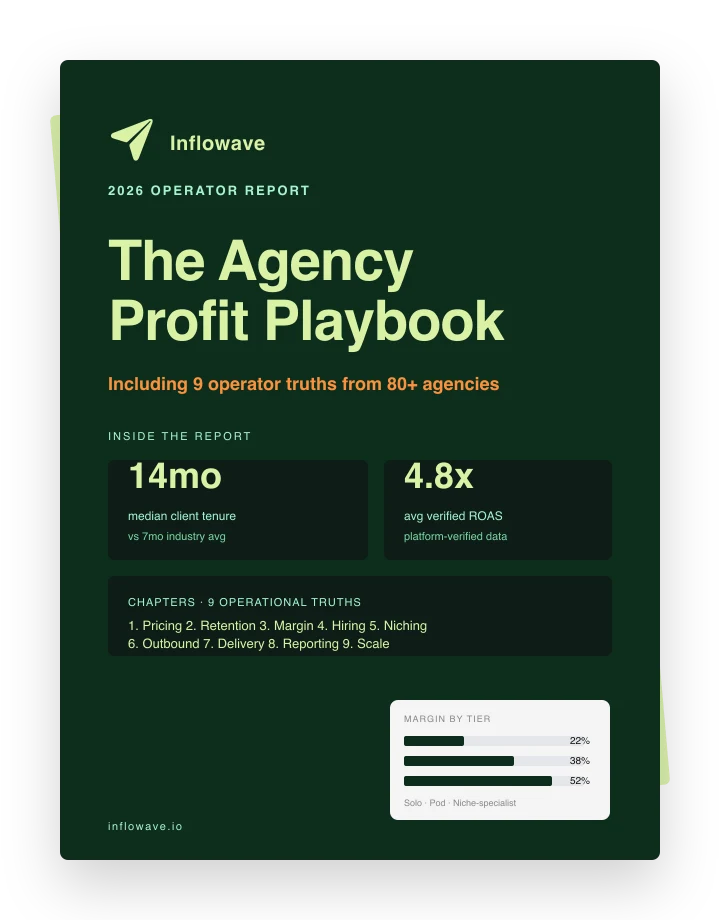
A lead magnet is a free resource you give away in exchange for someone's contact details, usually an email address or a DM. Instead of hoping a visitor comes back on their own, you trade something genuinely useful for permission to follow up. It is the step that turns anonymous traffic into people you can actually talk to.
This guide covers the definition, whether they still work in 2026, twenty-one real examples from companies you have heard of, what separates the ones that convert from the ones that sit unopened, and how to build your own.
TL;DR
- A lead magnet is a free offer exchanged for contact information.
- It beats "subscribe to our newsletter" because it promises something specific and immediate.
- The formats that convert best are tools, templates, checklists and quizzes, in roughly that order of effort.
- A great one solves a single narrow problem in under ten minutes.
- The magnet is only half the job. Without follow-up it produces a list, not revenue.
Do lead magnets still work in 2026?
Yes, but the bar has moved. A generic PDF that repackages a blog post no longer earns an email address, because everyone has one and nobody reads them. What still works is anything that does real work for the person: a tool that calculates something, a template they can use today, a checklist they can run through in five minutes.
Two things changed. First, people are far more protective of their inbox than they were five years ago, so the trade has to feel worth it at the moment of decision. Second, the capture point moved. A significant share of lead magnet delivery now happens in DMs rather than email, because the friction is lower and the open rate is higher. Nobody has to check a spam folder for a DM.
The format that has aged worst is the long ebook. The format that has aged best is the free tool.
21 real lead magnet examples
These are live examples from real companies, grouped by format. The point is not to copy them, it is to see the mechanic each one uses.
Free tools and calculators
The highest-effort format and the highest-returning one, because a tool keeps working after you build it and it ranks in search.
- HubSpot Website Grader. Enter a URL, get a scored report on performance, SEO and security. The score creates a problem you did not know you had, and HubSpot sells the fix.
- Ahrefs free SEO tools. A suite of stripped-down versions of the paid product. Each one answers a real question and each one shows you the ceiling of the free tier.
- Canva templates. Free design templates that require an account. The template is the magnet; the account is the product.
- Shopify business name generator. Catches people at the exact moment they are starting a business, which is the moment before they need a store.
- Inflowave free tools. We run more than twenty, including an Instagram audit and a fake follower checker. Between them they bring in over 5,000 organic clicks a month, which no static PDF would ever do. You can see the whole set on our free tools page.
Templates and swipe files
Lower effort than a tool, higher perceived value than a guide, because the person can use it immediately.
- HubSpot marketing plan templates. A set of fill-in-the-blank documents for a task most marketers dread starting from scratch.
- Notion template galleries. Creators give away workspace templates that only work inside Notion, which grows Notion and the creator at the same time.
- Copywriting swipe files. Collections of real ads or emails with annotations explaining why each one works.
- Social media content calendars. A month of post ideas in a spreadsheet. See our content calendar tools breakdown for the formats that work.
- Proposal and contract templates. Especially strong for agencies and freelancers, because the alternative is paying a lawyer.
Checklists and cheat sheets
The fastest to make and still among the best converting, because the promise is obviously small and obviously complete.
- Pre-launch checklists. Everything to do before a product, book or campaign goes live.
- Website audit checklists. A scannable list someone can run against their own site in ten minutes.
- Onboarding checklists. What to do in the first week with a new client, useful to any agency.
- Compliance and setup cheat sheets. One-page references for something fiddly, like ad account structure or DNS records for email.
Quizzes and assessments
Interactive, and the result feels personal, which is why the completion rates are high.
- Personality and style assessments. The result is the payoff, and the email is what unlocks it.
- Readiness scorecards. "Is your business ready to hire?" style quizzes that segment the person as they answer.
- Product matchers. A few questions that end in a recommendation, which doubles as qualification for your sales team.
Content and access
- Gated original research. An industry report with numbers nobody else has. Expensive to produce, but it earns links as well as leads.
- Free mini-courses by email. A five-day sequence that teaches one thing properly. It also warms the person up across several days instead of one.
- Webinars and live workshops. Best for higher-ticket offers where someone needs to trust you before they buy.
- Discounts and free trials. The default for e-commerce and SaaS. Low creative effort, and it attracts price-sensitive leads, so it works best when your margins allow it.
Lead magnets by business type
The best format depends entirely on who you are selling to.
Coaches and consultants. A book, a short assessment, or a scorecard. For most coaches the book is the lead magnet, which is why so many of them have one. The mistake is treating the book as the end of the funnel rather than the start, with nothing built to catch the person who finished it.
Marketing agencies. Audits win here. A free audit of the prospect's ads, site or social presence does the qualification for you: you see their setup before the first call, and they see a gap they want closed. Templates and proposal packs work for the smaller end of the market.
Local businesses. Discounts, first-visit offers, and booking incentives. Nothing clever. A restaurant does not need a whitepaper, it needs a reason to capture a phone number.
E-commerce. Discount codes, size and fit guides, and quizzes that recommend a product. The quiz is underused and it segments the list as it captures it.
B2B and SaaS. Original research, calculators, and templates aimed at the specific job title you sell to. Longer consideration cycles mean the magnet has to be genuinely useful rather than merely interesting.
Creators and influencers. Presets, templates, swipe files, and DM-delivered resources. The audience is already on the platform, so the capture should happen there rather than on a landing page.
What makes a lead magnet actually convert
Four traits separate the ones that work from the ones that get downloaded and forgotten.
Specific. It solves one clear problem, not a topic. "The pre-launch checklist" beats "the complete guide to marketing." The narrower the promise, the more believable it is.
Immediately useful. Value should arrive in minutes. A two hundred page ebook is a burden, not a gift. If it takes a weekend to consume, it never gets consumed.
Relevant to what you sell. A magnet that attracts the wrong people produces a big list and no revenue. If you sell to agencies and your magnet appeals to students, you have built an audience you cannot monetise.
Easy to say yes to. One field if possible. Every extra form field costs you conversions, and asking for a phone number before you have earned it kills the exchange.
The simplest test: would someone pay a small amount for this? If yes, it will convert for free. If it feels like filler you are giving away, it will underperform no matter how good the landing page is.
How to create a lead magnet
- Pick one problem your ideal customer has that you can solve quickly. Look at the questions you get asked repeatedly on calls, that is your list.
- Choose the lightest format that solves it. Most problems need a checklist or template, not a course.
- Make it genuinely good. Do not gate something thin. The magnet is the first sample of your work, and people extrapolate from it.
- Put it behind one field. An email address, or a DM trigger. Every extra question reduces the number of people who finish.
- Deliver it instantly and start the follow-up in the same breath. The moment of highest interest is the second they opt in, not three days later.
- Measure what happens after. Opt-in rate tells you if the offer works. What happens over the following month tells you if the leads were worth having.
Where to capture: forms, landing pages and DMs
Most advice assumes a landing page with an email field. That is still the default, but it is no longer the only option, and for social-led businesses it is often the worst one.
Landing pages work when traffic arrives from search or ads and the person is already in a considering frame of mind.
Inline forms and exit popups work on content pages where someone is already reading about the problem your magnet solves.
DM capture works when the audience is already on Instagram, Facebook or WhatsApp. The mechanic: someone comments a keyword on a post, an automation sends them the magnet in a DM, and the conversation is now open. It converts better than a landing page for the same audience because there is no click away from the platform, no form, and no spam folder. It also starts a two-way conversation rather than adding a row to a list.
The follow-up is the part most people skip. A lead magnet with no sequence behind it produces a list of people who took something and left. Whatever you capture needs to land somewhere that tracks it and reminds you to follow up, whether that is a CRM or a spreadsheet you actually open. If you are running this across several clients or channels, see how a CRM for marketing agencies keeps captured leads separated by account.
Common mistakes
- Gating something worthless. If the magnet disappoints, you have taught the person that your paid work will too.
- Making it too big. Ambition kills consumption. Nobody finishes the ebook.
- Attracting the wrong audience. A magnet that appeals to everyone qualifies nobody.
- Asking for too much. Name, company, phone, team size and budget before delivery is not a trade, it is an interrogation.
- No follow-up. The most common failure by far. The magnet is the beginning of the process, not the end of it.
- Never updating it. A checklist referencing a platform feature that no longer exists costs you more trust than it earns.
FAQ
What is a lead magnet?
A lead magnet is a free resource, such as a checklist, template, tool, quiz or discount, offered in exchange for someone's contact information. It converts anonymous visitors into contactable leads by making an explicit trade: something immediately useful for them, permission to follow up for you.
What are some examples of lead magnets?
Common examples include free tools and calculators like HubSpot's Website Grader, template packs, checklists, quizzes and assessments, gated original research, free mini-courses delivered by email, webinars, and discount codes. The strongest examples solve one narrow problem completely rather than promising to cover an entire subject.
Do lead magnets still work?
Yes, but generic ones do not. People guard their inbox more than they used to, so the offer has to be specific and immediately useful. Free tools, templates and checklists still convert well. Long ebooks and repackaged blog content have largely stopped working, and delivery via DM now often outperforms email capture for social-led businesses.
What is another name for a lead magnet?
You will see the same thing called an opt-in offer, a content upgrade, a freebie, an ethical bribe, or a gated asset. A content upgrade specifically means a magnet tailored to one particular article rather than the whole site.
How do I create a good lead magnet?
Pick one specific problem your ideal customer has, choose the simplest format that solves it, make it genuinely valuable rather than filler, gate it behind a single field or a DM trigger, deliver it instantly and start following up immediately. Then measure what happens over the next month, not just the opt-in rate.
Are free tools good lead magnets?
They are among the best, because they do real work for the user and they keep earning after launch by ranking in search, which a static PDF cannot do. The tradeoff is build effort. Our own tools bring in over 5,000 organic clicks a month, which is why we treat them as infrastructure rather than as campaigns.
How long should a lead magnet be?
Short enough to finish in one sitting. A one-page checklist or a single template usually outperforms a fifty-page guide, because the value arrives before attention runs out. Length is not the measure; time to usefulness is.
Related reading
- What is lead generation?
- Instagram lead generation
- What is a marketing funnel?
- B2B lead generation
- Free lead generation tools for agencies
Explore More
- Google Maps Scraper - How to scrape Google Maps for business leads with a free Chrome extension: step-by-step setup
- B2B Lead Generation - What B2B lead generation actually is, the channels that work in 2026, a repeatable process
- Feature: Sales Pipeline - Track every deal from first DM to closed
- Feature: Workflow Automation - Automate the follow-up you keep forgetting
- Feature: Forms - People who start your form and never finish are still a contact
- Feature: AI Funnel Studio - Build the offer and the pages in one go
- Pricing - Plans built for Instagram businesses