What an AI voice agent actually does in 2026
It is not an IVR, and the difference is the point
A phone menu routes people. A voice agent has the conversation. It listens, asks follow-up questions in its own words, handles interruptions and objections, and takes an action at the end such as booking a slot or transferring to a person. The gap between the two is the difference between a caller pressing three and a caller arriving in your calendar already qualified.
The value is speed, not novelty
Our research into first-contact messaging found that roughly a quarter of business enquiries are never answered at all, which lines up almost exactly with what Harvard Business Review reported for web leads in 2011. Nothing changed in fifteen years because the problem was never intent, it was staffing. A voice agent answers at two in the morning and calls a new enquiry four minutes after it arrives, which is where most of the gain comes from.
Voice alone is not enough for an agency
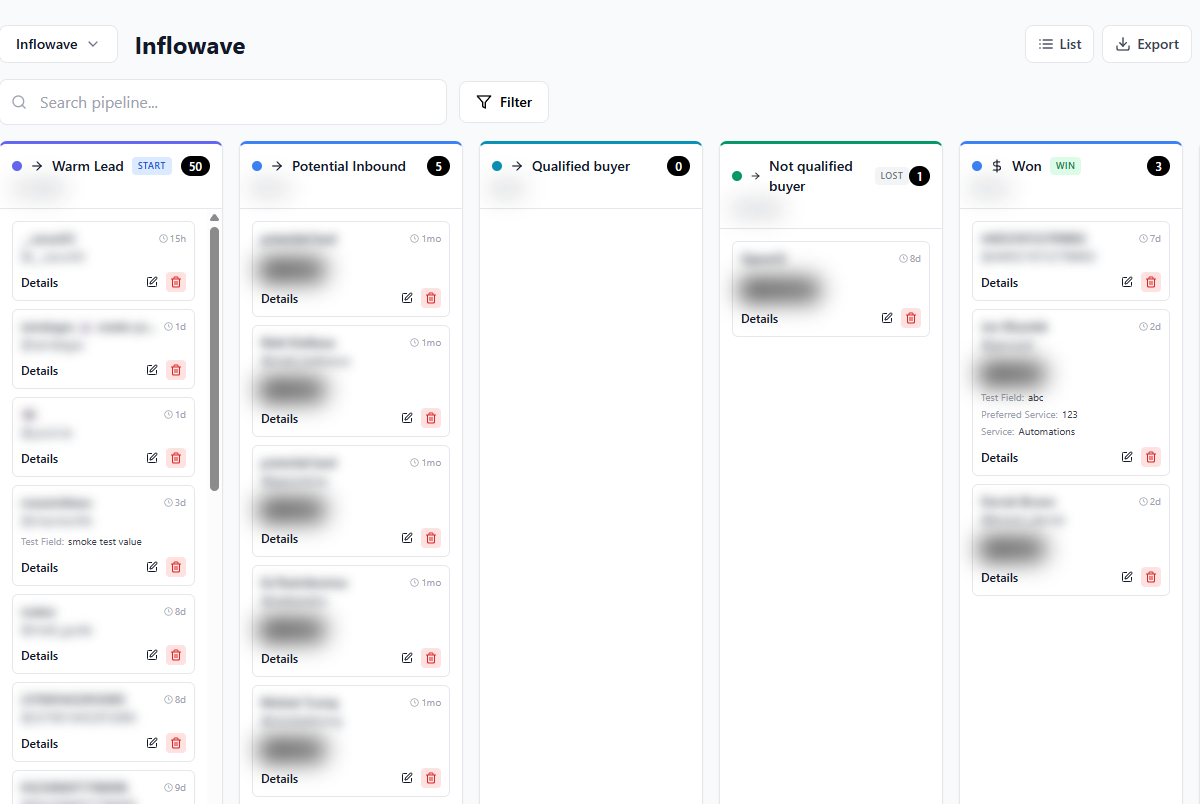
Most voice AI products are a standalone layer that hands you a transcript and a webhook. For an agency running several client accounts that creates the same problem as a standalone dialer: the conversation lives apart from the contact. Inflowave runs the voice agent inside the CRM, so a call sits beside the same person's DMs, emails and deal stage, with numbers and voices separated per client. If you want reps making the calls instead, the power dialer covers the same lists with a human on the line.
What to ask a vendor
Ask whether the agent can book into a live calendar or only capture intent, whether it transfers to a human mid-call with context intact, how transcripts are stored and searched afterwards, and what happens on the calls it handles badly. Then ask how numbers, voices and recordings are separated if you run this for more than one client, because that is the question standalone voice tools tend to answer worst.