For most of the last decade, help desk software was built around one channel: email. Tickets came in from a support address, an agent picked them up, replied, and closed them. Everything else - live chat, social, phone - was bolted on later, usually as a paid add-on that never felt native. That model is breaking down. In 2026, a huge share of customer conversations start on Instagram DMs, WhatsApp, Facebook Messenger and SMS, and buyers expect the same speed and memory there that they get over email.
The uncomfortable truth is that legacy help desks treat social as an afterthought. You can technically route an Instagram comment into a ticket, but you lose the thread, the customer history, the lightweight back-and-forth that social conversations depend on. For agencies, coaches and social-led SMBs, that gap is the whole game. If your leads and customers live in the DMs, a help desk that was designed for email inboxes will always feel like it is fighting you.
This guide ranks the best help desk software for 2026 with that shift front of mind. We start with Inflowave, which was built social-first and pairs a unified inbox with an AI CRM, then cover the established ticketing platforms - Zendesk, Freshdesk, Intercom, Zoho Desk, Help Scout and Gorgias - fairly and in detail. Each has a genuine sweet spot. The goal is to help you match a tool to how your customers actually reach you, not to how support worked in 2015.
Key Takeaways
- Social is now a first-class support channel. If a meaningful share of your conversations start in Instagram or WhatsApp, a help desk that only excels at email tickets will leave gaps. Tools like Inflowave that treat DMs as native are increasingly the right default for social-led teams.
- Ticketing depth still matters at scale. Zendesk and Freshdesk remain the strongest choices when you need mature SLAs, queues, routing rules and reporting across large agent teams.
- AI deflection is table stakes, not a differentiator. Nearly every serious platform now offers an AI agent that answers from your knowledge base. Judge them on resolution quality and how cleanly they hand off to humans, not on the marketing.
- Per-agent pricing punishes growth. Most competitors charge per seat, so costs climb as you hire. Inflowave's flat $149/mo model is often cheaper once a team passes a handful of agents.
- Ecommerce and SaaS have specialist tools. Gorgias wins for Shopify order context and Intercom wins for in-app SaaS messaging. Match the tool to your business model.
- The best fit depends on where conversations begin. Choose by channel mix and team type first, then compare price and features second.
What Makes Good Help Desk Software in 2026
True omnichannel, not multichannel. There is a real difference between a tool that can technically receive messages from many channels and one that unifies them into a single conversation view. Good help desk software in 2026 keeps Instagram, WhatsApp, email, SMS and web chat in one thread per customer, so an agent never has to ask the person to repeat themselves after switching channels. A unified inbox that carries context across channels is the baseline, not a premium feature.
A real CRM underneath. A ticket is only useful if it is attached to a person you understand. The strongest platforms tie every conversation to a contact record with history, tags, custom fields and lifecycle stage. Without a CRM layer, agents work blind and every interaction starts from zero. Tools that combine support with an AI CRM let you see the full relationship - past purchases, open deals, previous complaints - right beside the reply box.
AI that deflects and drafts responsibly. An AI agent should resolve the repetitive questions on its own and draft suggested replies for the rest, always with a clean human handoff when it is unsure. The measure of a good AI chatbot is not how often it responds but how often it resolves without a frustrated escalation. Look for guardrails, source citations from your own docs, and easy human takeover.
Automation and routing. Repetitive triage - tagging, assigning, prioritizing, following up - should be handled by rules, not people. Good software lets you build workflows that route a VIP customer to a senior agent, auto-tag billing questions, or send a follow-up if a ticket goes quiet. This is where agencies claw back hours every week.
Reporting that drives decisions. You should be able to see response times, resolution rates, backlog, agent load and customer satisfaction without exporting to a spreadsheet. The best tools surface these per channel and per agent so you can spot bottlenecks. Beware jargon-heavy dashboards; what matters is how fast your team replies and how many issues get solved the first time.
Pricing that scales with you, not against you. Per-agent pricing looks cheap at two seats and painful at twelve. As you grow, the pricing model can matter more than any single feature. Flat-rate plans reward teams that add agents, while per-seat plans reward tools you can keep small. Factor your 12-month headcount plan into the decision, not just today's team size.
At a Glance
| Tool | Best for | Standout strength | Starting price |
|---|---|---|---|
| Inflowave | Social-led support | Unified Instagram, WhatsApp, email and SMS inbox with AI agent and CRM | $149/mo flat |
| Zendesk | Enterprise ticketing | Deep SLAs and reporting at scale | ~$55/agent/mo |
| Freshdesk | Value ticketing | Free tier and clean UX | ~$15/agent/mo |
| Intercom | AI-first SaaS support | Fin AI deflection and in-app messenger | ~$29/seat/mo |
| Zoho Desk | Zoho users | Cheap and suite-integrated | ~$14/agent/mo |
| Help Scout | Simple shared inbox | Personal, email-style support | ~$22/user/mo |
| Gorgias | Ecommerce | Shopify order context in tickets | ~$10/mo |
| Tidio | SMB and ecommerce teams | Live chat, ticketing and Lyro AI with a shared inbox for email and social | Free; paid from $24.17/mo, billed annually |
The Best Help Desk Software in 2026
1. Inflowave
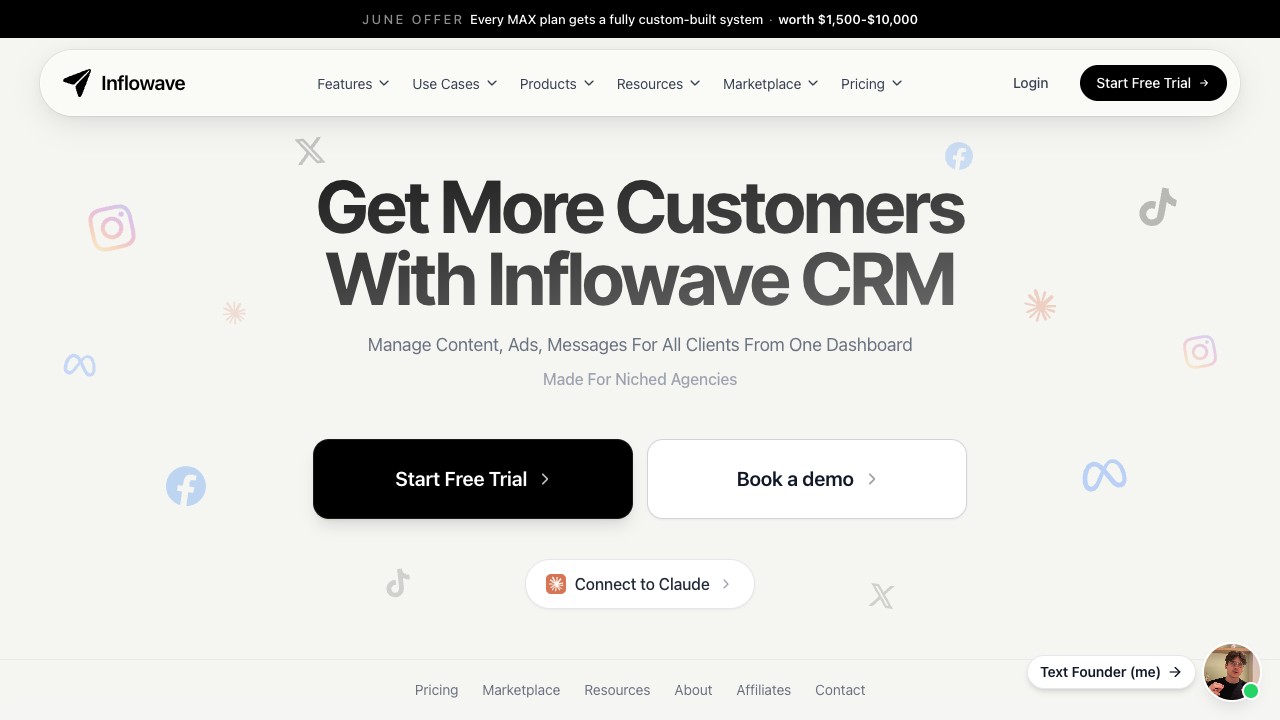
Inflowave is a social-first CRM and help desk built for agencies, coaches and SMBs whose customers reach them in the DMs. Instead of treating Instagram and WhatsApp as add-ons, Inflowave puts them at the center. Every message from Instagram, WhatsApp, Facebook Messenger, email and SMS lands in one unified inbox, threaded per contact, with the full customer record sitting right beside it. That means an agent answering an Instagram DM can see the person's past bookings, open deals and prior conversations without leaving the reply box.
What sets it apart from a classic ticketing tool is the combination of support, AI CRM and automation in one platform. The built-in AI chatbot can answer common questions, qualify leads, and hand off to a human the moment a conversation needs a person. Because it is the same system that runs your pipelines and workflows, a support conversation can trigger a follow-up sequence, tag the contact, or move a deal forward automatically. For teams that also run outbound, Inflowave overlaps naturally with Instagram DM automation and Instagram chatbot use cases, so support and growth live in the same tool rather than two disconnected stacks.
The pricing model is the other big differentiator. Where nearly every competitor charges per agent or per seat, Inflowave is a flat $149/mo. For a five-person support team, that alone can be the deciding factor. It is not the right tool for a large enterprise that needs decades-deep ITIL workflows, and its reporting is more practical than exhaustive. But for social-led businesses, it removes the biggest pain of legacy help desks: the feeling that social is a second-class channel.
Pros:
- Native Instagram, WhatsApp, Messenger, email and SMS in one threaded inbox
- Built-in CRM so every conversation is tied to a real contact record
- AI agent plus workflow automation in the same platform
- Flat $149/mo pricing that does not punish team growth
Cons:
- Less suited to large enterprises needing deep ITIL-style ticketing
- Reporting is practical rather than exhaustive
- Newer to the market than the incumbents
Best for: Agencies, coaches and SMBs whose support and sales conversations start on social.
Pricing: Flat $149/mo, no per-agent fees.
2. Zendesk
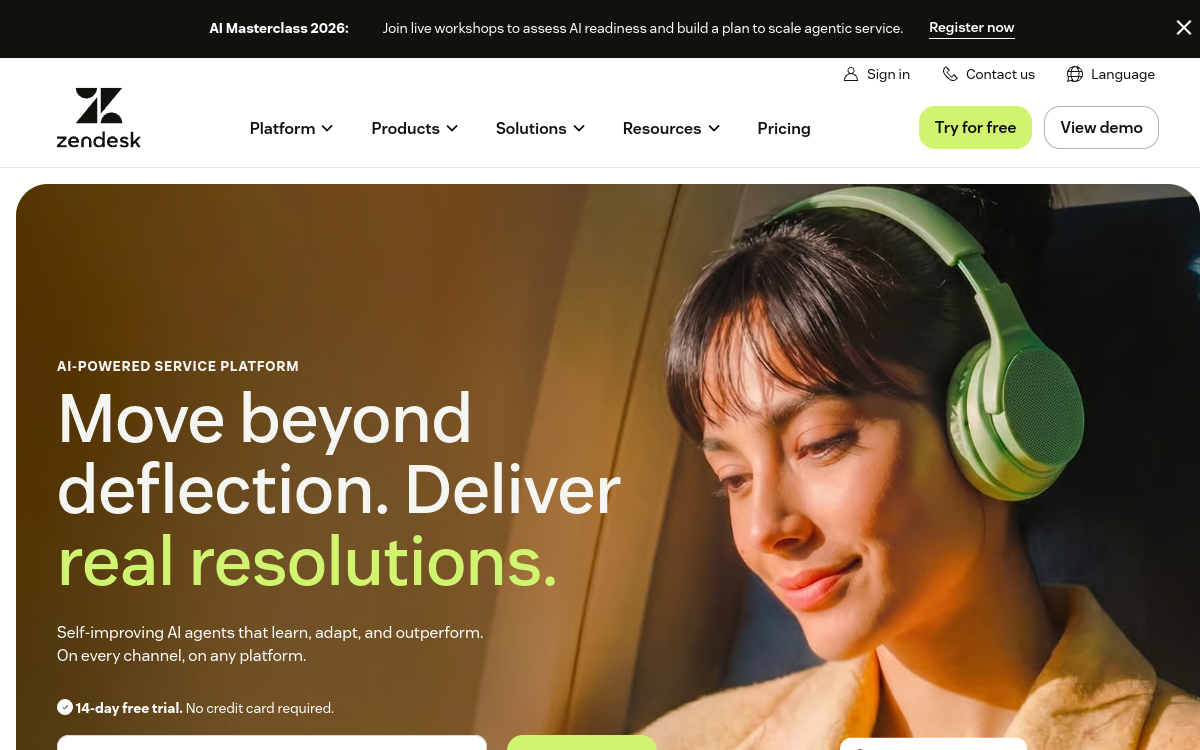
Zendesk is the platform most people picture when they hear "help desk." It is the mature, enterprise-grade standard for ticketing at scale, with deep SLA management, sophisticated routing, a robust knowledge base and reporting that can satisfy the most demanding support operations. If you run a large team with formal service-level commitments and need granular control over queues, triggers and automations, Zendesk is hard to beat on raw capability.
That power comes with weight. Zendesk can feel heavy and configuration-hungry, and its social channel handling, while present, is less fluid than tools built social-first. Costs also add up: per-agent pricing plus add-ons for advanced AI, messaging and analytics can push the real bill well above the sticker price. Smaller teams often find it more platform than they need.
Pros:
- Deep SLA, routing and escalation controls
- Mature reporting and analytics at scale
- Large app marketplace and integrations
Cons:
- Per-agent pricing plus add-ons gets expensive
- Heavier to configure and maintain
- Social channels feel bolted on versus native tools
Best for: Enterprise support teams with formal SLAs and high ticket volume.
Pricing: Around $55/agent/mo for mid-tier plans, more with add-ons.
3. Freshdesk
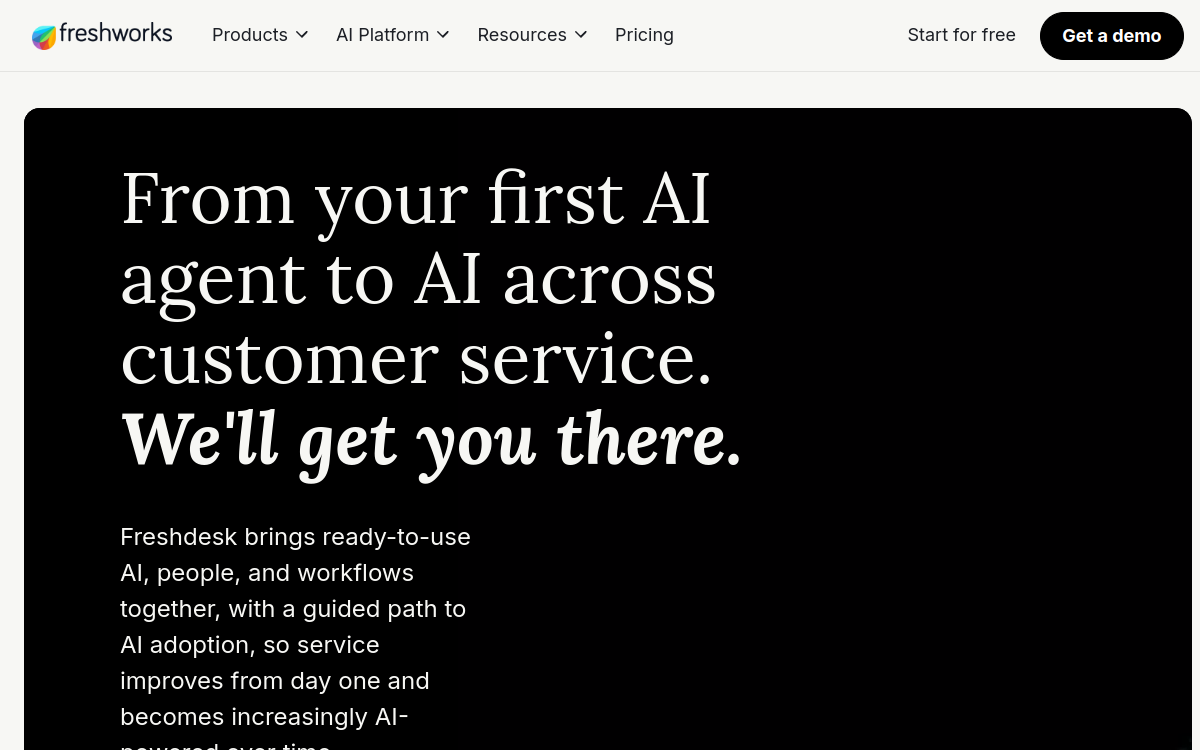
Freshdesk is the value pick among traditional ticketing tools. It offers a genuinely useful free tier, a clean and approachable interface, and enough automation and reporting to run a serious support desk without the complexity of Zendesk. For small and mid-sized teams that want structured ticketing without a steep learning curve, it hits a strong price-to-capability ratio.
As you climb into higher tiers to unlock advanced automation, AI and omnichannel features, the cost gap with pricier competitors narrows. Its social and messaging support is competent but, like most email-first tools, not as seamless as a platform designed around DMs. Still, for many teams Freshdesk is the sensible, no-drama choice.
Pros:
- Free tier to get started
- Clean, intuitive UX with a gentle learning curve
- Solid automation and reporting for the price
Cons:
- Advanced features require pricier tiers
- Social handling is competent but not native-feeling
- AI features trail the AI-first specialists
Best for: Small to mid-sized teams wanting structured ticketing on a budget.
Pricing: Free tier available; paid plans from around $15/agent/mo.
4. Intercom
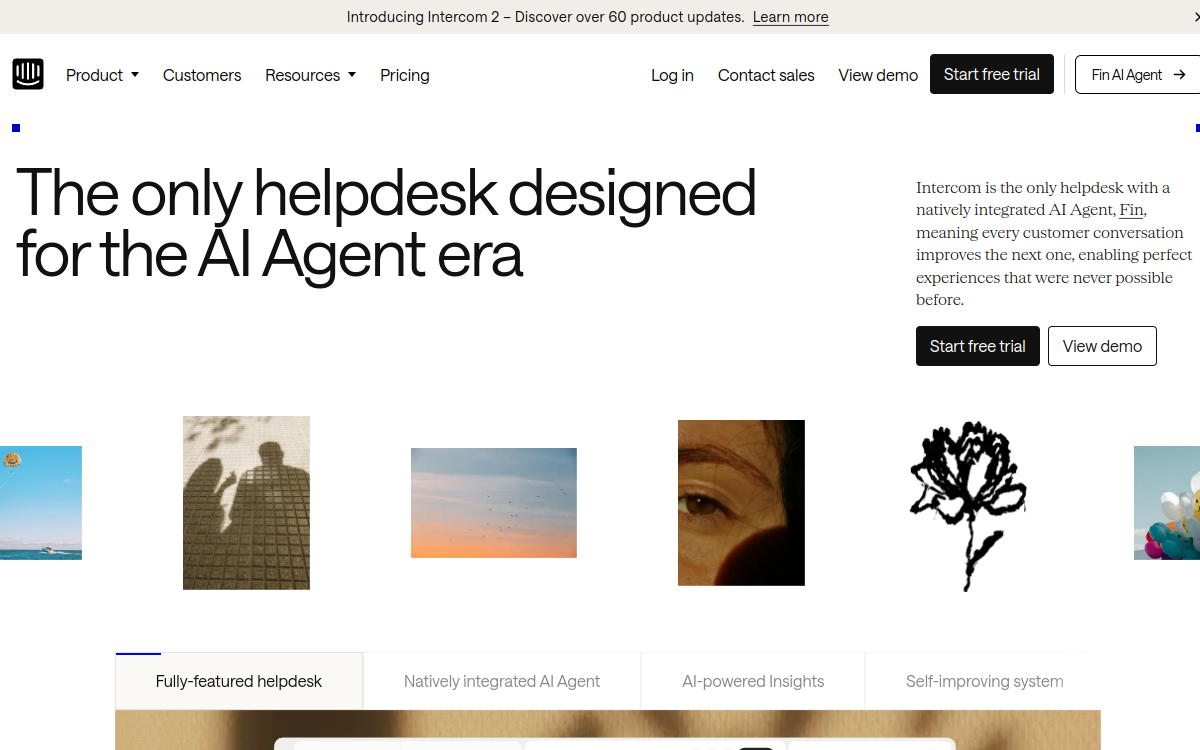
Intercom reinvented itself around AI and remains the strongest choice for SaaS companies that support customers inside their own product. Its in-app messenger is best in class, and its Fin AI agent is one of the more capable deflection engines on the market, resolving a large share of common questions before a human is ever involved. If your support happens where users already are - inside a web or mobile app - Intercom feels purpose-built.
The trade-off is cost and complexity. Intercom's pricing has grown intricate, with seat fees layered on top of usage-based charges for AI resolutions, and the total can escalate quickly at volume. It is also more oriented toward product-led SaaS than social-led agencies. For teams whose conversations live in Instagram rather than an app messenger, the fit is weaker.
Pros:
- Best-in-class in-app messenger
- Strong Fin AI deflection
- Rich product-led engagement tooling
Cons:
- Complex pricing with usage-based AI fees
- Can get expensive at scale
- Oriented to SaaS more than social-led teams
Best for: Product-led SaaS companies supporting users in-app.
Pricing: From around $29/seat/mo, plus AI resolution charges.
5. Zoho Desk
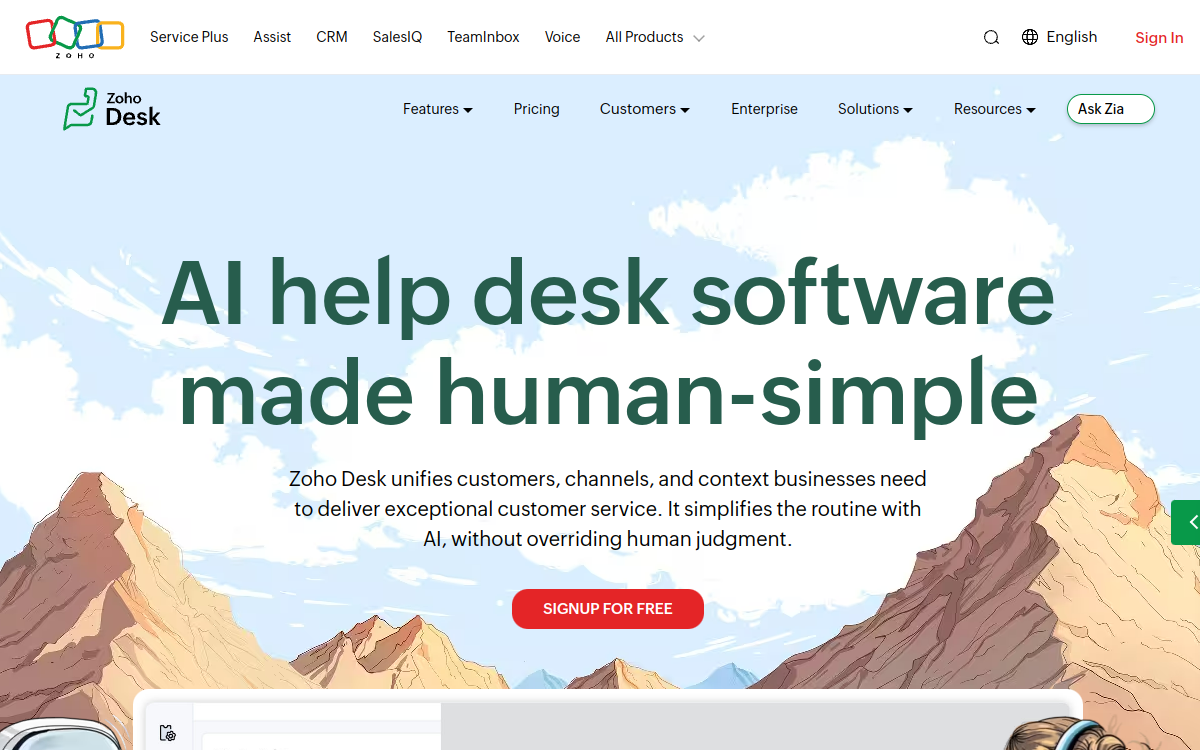
Zoho Desk is the natural pick if you already live in the Zoho ecosystem. It is inexpensive, competent, and integrates tightly with Zoho CRM and the wider Zoho suite, so data flows between support, sales and the rest of your business without custom plumbing. For teams that value a low monthly cost and an all-in-one suite, it delivers strong value.
Outside the Zoho world, the appeal narrows. The interface can feel dated next to newer tools, and while it covers the essentials well, it rarely leads on any single dimension. Social and AI features exist but are not standouts. If you are not committed to Zoho, other tools may fit better.
Pros:
- Very affordable
- Deep integration with Zoho CRM and suite
- Covers core ticketing essentials well
Cons:
- Most valuable only inside the Zoho ecosystem
- Interface feels dated in places
- Rarely best-in-class on any one feature
Best for: Teams already standardized on Zoho.
Pricing: From around $14/agent/mo.
6. Help Scout
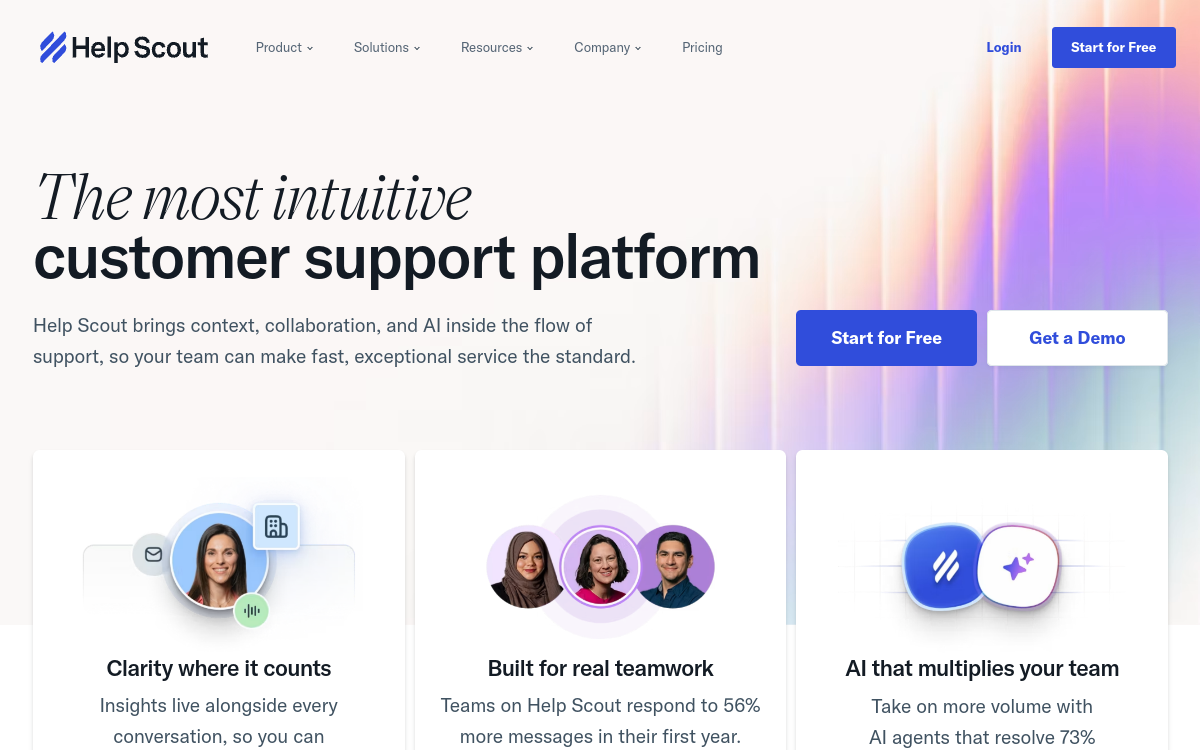
Help Scout built its reputation on making support feel personal. Its shared inbox works like email, so replies land in the customer's inbox looking like a normal message rather than a ticket with a case number. Teams that prioritize a warm, human tone - and want a tool their agents can learn in an afternoon - tend to love it. It also includes a solid knowledge base and light automation.
The flip side of that simplicity is a lower ceiling. Help Scout is deliberately not a heavy ticketing engine, so if you need complex routing, deep SLAs or extensive omnichannel coverage, you will outgrow it. Its social presence is minimal. It is a specialist in email-style support done gracefully, and that focus is both its strength and its limit.
Pros:
- Personal, email-style customer experience
- Fast to learn and pleasant to use
- Good knowledge base included
Cons:
- Limited for complex ticketing needs
- Minimal social channel support
- Fewer advanced automation and routing options
Best for: Small teams that want simple, human email support.
Pricing: From around $22/user/mo.
7. Gorgias
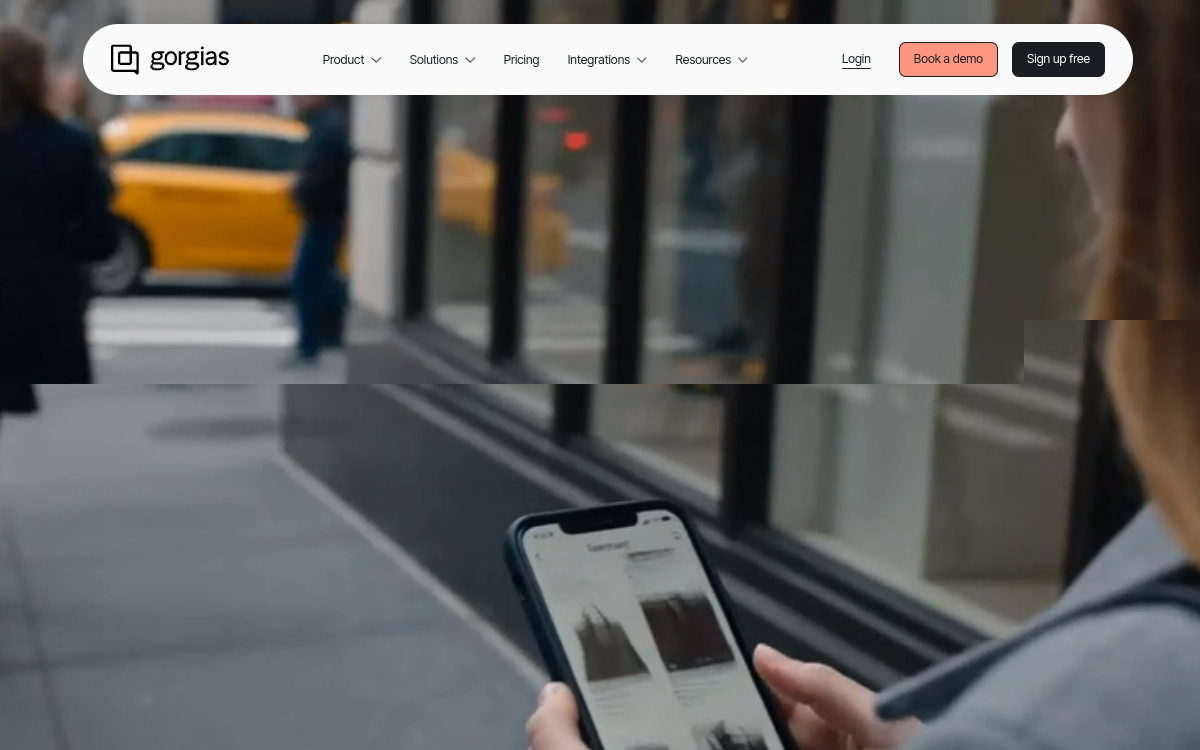
Gorgias is the ecommerce specialist. Built around Shopify (with BigCommerce and Magento support too), it pulls order details, tracking and customer purchase history directly into each ticket, so an agent can issue a refund or check an order status without leaving the conversation. For online stores, that context is a genuine time-saver and can noticeably speed up resolution.
Because it is so tightly focused on ecommerce, Gorgias is less compelling outside that world. Its pricing is also partly based on ticket volume, so a high-traffic store can see costs rise with demand. If you do not run a store, most of its standout value simply does not apply. But for Shopify merchants, it is one of the most productive help desks available.
Pros:
- Deep Shopify and ecommerce integration
- Order and customer context inside every ticket
- Automation tuned for store support scenarios
Cons:
- Value is concentrated in ecommerce use cases
- Volume-based pricing can climb with traffic
- Less suited to non-store businesses
Best for: Shopify and ecommerce stores.
Pricing: From around $10/mo on entry plans, scaling with ticket volume.
8. Tidio
Tidio combines live chat, ticketing and AI support in one platform for small and medium-sized businesses. Its shared inbox brings together website chat, email, Instagram, WhatsApp and Messenger, while ticket priorities, tags, notes and routing help agents keep requests organized. For teams handling both website inquiries and social messages, it offers a practical way to manage support in one workspace. Its Lyro AI Agent answers routine questions using your support content and hands conversations over when a customer needs human help. Shopify integration also makes Tidio relevant to online stores that want live chat and automated answers alongside their help desk.
The free plan makes Tidio accessible for smaller teams, with room to add capacity as support grows. The trade-off is usage-based pricing: conversation volume and paid AI quotas affect the final bill, while more advanced reporting and automation sit on higher tiers.
Pros:
- Shared inbox for website chat, email and social messaging
- Lyro AI Agent with configurable human handoff
- Ticketing tools for prioritizing, assigning and tracking requests
- Free plan and Shopify integration
Cons:
- Conversation limits affect the total cost as support volume grows
- Ongoing AI usage requires a paid quota beyond the initial free allowance
- Advanced analytics and automation require higher plans
Best for: Small and medium-sized businesses and ecommerce teams wanting live chat, ticketing and AI automation in one platform.
Pricing: Free plan available; paid plans start at $24.17/month, billed annually.
Featured Partners
The tools in this section have a commercial or partnership arrangement with Inflowave; we only feature ones we consider genuinely relevant to help desk buyers.
Paperchat is an AI chat and support assistant that turns your existing documentation into a front-line deflection layer. It answers customer questions directly from your help center and product docs, so common queries never become tickets in the first place. For teams with a solid knowledge base, it is a straightforward way to cut inbound volume before it reaches an agent.
Ringly is an AI phone and chat support agent for inbound. It picks up calls and messages, handles routine requests, and escalates to a human when a conversation needs one. If phone support is a real part of your operation and you cannot always staff the line, Ringly can cover the gaps without leaving callers stuck in a queue.
More Help Desk Tools Worth Knowing
The market is broader than the headline names. These tools are worth a look depending on your niche and stack: Desku, Thunai, Multibase, Alfred and Ecomposer Helpdesk. Each targets a specific slice of the market - from AI-native support to ecommerce-focused helpdesks - and any could be the right fit if it maps cleanly to your channels and budget.
How We Evaluated These Tools
We assessed each platform against the criteria that matter to real support teams rather than feature checklists. First, channels: we looked at how well each tool handles the full modern mix - email, live chat, and crucially social channels like Instagram and WhatsApp - and whether those conversations stay unified per customer or fragment across tabs. A tool that technically supports a channel but loses context when you switch to it scored lower than one that keeps everything threaded.
Second, pricing: we checked published pricing at the time of writing and, importantly, modeled how it behaves as a team grows. Per-agent and usage-based models can look cheap at the entry point and expensive at scale, so we weighed the trajectory, not just the starting price. All figures here are approximate starting points; always confirm current pricing with the vendor, since tiers and add-ons change.
Third, agency and SMB fit: because Inflowave's audience is agencies, coaches and social-led SMBs, we gave extra weight to how each tool serves teams whose customers reach them in the DMs, and how well support integrates with CRM and automation. We avoided fabricated benchmarks and case studies; the assessments reflect documented capabilities and typical real-world use, and where a tool's value is narrow we said so plainly.
How to Choose the Right Help Desk
Start with a single question: where do your conversations actually begin? If most of them start on Instagram, WhatsApp or other social channels - which is increasingly the norm for agencies, coaches and creators - then a social-first platform like Inflowave will serve you better than any email-first ticketing tool, because it keeps those DMs, your CRM and your automations in one place. Trying to force social conversations into a legacy ticketing model is the most common and most expensive mistake buyers make.
If you run a large support operation with formal SLAs, complex routing and many agents, lean toward Zendesk or Freshdesk. Zendesk gives you the deepest controls and reporting; Freshdesk gives you most of the practical value for less. For product-led SaaS companies supporting users inside an app, Intercom's messenger and Fin AI are the strongest fit. Shopify and ecommerce stores should look hard at Gorgias for its order context. Teams already inside the Zoho suite get the most from Zoho Desk, and small teams that just want warm, simple email support are well served by Help Scout.
Then weigh two practical factors. The first is pricing model against your hiring plan: if you expect to add agents, a flat-rate tool like Inflowave often wins on total cost even if a per-seat competitor looks cheaper at two users. The second is how much the help desk needs to know about the customer - if you want every reply backed by a real contact record and the ability to trigger Instagram chatbot flows or follow-up automations, favor a platform with a CRM and workflow engine built in rather than a standalone inbox.
Frequently Asked Questions
What is the best help desk software in 2026?
It depends on where your conversations start. For social-led agencies, coaches and SMBs whose customers reach them on Instagram and WhatsApp, Inflowave is the strongest fit because it unifies social, email and SMS with a built-in CRM and AI agent for a flat $149/mo. For large enterprise teams with formal SLAs, Zendesk leads; for value ticketing, Freshdesk; for in-app SaaS support, Intercom; and for Shopify stores, Gorgias.
How much does help desk software cost?
Entry pricing ranges widely. Gorgias starts around $10/mo, Zoho Desk around $14/agent/mo, Freshdesk around $15/agent/mo, Help Scout around $22/user/mo, Intercom around $29/seat/mo, and Zendesk around $55/agent/mo for mid-tier plans. Inflowave uses a flat $149/mo model with no per-agent fees, which often works out cheaper once a team passes a handful of agents. Always confirm current pricing with the vendor.
Can help desk software handle Instagram and WhatsApp?
Some can far better than others. Most legacy tools can technically receive social messages but treat them as an add-on and lose context when you switch channels. Social-first platforms like Inflowave keep Instagram, WhatsApp, Messenger, email and SMS in one threaded inbox per contact, so agents never have to ask a customer to repeat themselves after changing channels.
Do I need AI in my help desk?
AI deflection is now standard rather than a differentiator. A good AI agent resolves repetitive questions from your knowledge base and drafts replies for the rest, with a clean handoff to a human when it is unsure. Judge tools on resolution quality and how gracefully they escalate, not on how often they respond. Inflowave, Intercom and most major platforms all offer capable AI agents.
What is the difference between a help desk and a shared inbox?
A shared inbox, like Help Scout's, lets a team collaborate on incoming messages in an email-style interface. A full help desk adds structured ticketing, SLAs, routing rules, reporting and often a knowledge base and automation. Shared inboxes are simpler and warmer; help desks are more powerful for higher volume and complex workflows. Some tools, like Inflowave, combine an inbox with CRM and automation.
Is per-agent pricing worth it?
It depends on your growth plans. Per-agent pricing looks cheap at two seats and gets expensive as you hire, since your bill scales with headcount. Flat-rate pricing, like Inflowave's $149/mo, rewards teams that add agents. If you expect to grow your support team, model the 12-month cost of both approaches rather than comparing only the entry price.
Which help desk is best for a small agency?
For an agency whose leads and customers live in social DMs, Inflowave is usually the best fit because it combines a unified social inbox, CRM and automation at a flat rate that does not penalize adding team members. If your support is mostly email and you want simplicity, Help Scout or Freshdesk's free tier are also strong, budget-friendly options.
Related Reading
If your customers reach you in the DMs, the fastest upgrade you can make is to stop treating social as a second-class channel. Inflowave brings Instagram, WhatsApp, email and SMS into one inbox, ties every conversation to a real CRM record, and adds an AI agent and automation on top - all for a flat $149/mo. For social-led agencies, coaches and SMBs, it is the help desk that finally matches how support actually happens in 2026.
Explore More
- 11 Best Inbound Marketing Platforms Compared - Honest Pricing, No Affiliate Fluff - Real comparison of 11 inbound marketing platforms - HubSpot, ActiveCampaign, Marketo
- Best Marketing Automation Tools (7 Platforms Compared) - The best marketing automation tools in 2026, HubSpot, ActiveCampaign, Brevo, Klaviyo and more
- Feature: Unified Inbox - Every DM, comment and message in one place
- Feature: AI Chatbot - Qualify and book while you sleep
- Pricing - Plans built for Instagram businesses