Most cold calling scripts die in the opening moments, and not because the words are wrong. They die because they were written to be read on a page and then handed to someone who has to say them while a stranger is deciding whether to hang up.
Below are the scripts for the four moments that decide a cold call: the opener, the body, the objection, and the close. Every one of them is written to be spoken. Read each one out loud before you deploy it. Anything you stumble over, a rep will stumble over under pressure.
Cold calling script openers: buy permission, nothing more
The most common mistake in a cold calling script is that the opener tries to sell. It cannot. The only job of an opener is to buy permission for the next thirty seconds.
1. The permission opener, for cold lists
"Hi [Name], it's [Your name] from [Company]. I know I'm calling out of nowhere. Can I take thirty seconds to tell you why, and then you can tell me to go away?"
This survives being said out loud because it names the awkward thing first. The prospect was already thinking "this is a cold call". Saying it before they do removes their reason to be defensive.
2. The reference opener, for warm and semi-warm lists
"Hi [Name], [Your name] here from [Company]. You downloaded the [asset] on Tuesday and I wanted to see whether it was actually useful or whether it missed what you were looking for."
3. The referral opener, when you have a real name
"Hi [Name], [Your name] from [Company]. [Referrer] mentioned you were the person who owns [area]. Did they warn you I'd call?"
Only use this if the referral is real. A fabricated referral is the fastest way to become the story someone tells about your company.
4. The pattern interrupt, for lists that have been called before
"Hi [Name], this is [Your name]. You've probably had three of these this week. I'll be quicker than the other two. Thirty seconds?"
Useful on tired lists where the standard permission opener is itself the pattern.
5. The straight opener, for senior people who hate preamble
"[Name], [Your name] from [Company]. Cold call. Reason I'm ringing is [one specific reason, eight words maximum]. Worth ninety seconds or not?"
Use this when the prospect is senior and hates preamble. It respects their time by not pretending to.
6. The observation opener, when you have done real research
"Hi [Name], [Your name] from [Company]. I noticed [specific, verifiable, recent thing about their business]. That usually means [plausible consequence]. Am I reading that right?"
The prospect can tell within one sentence whether you actually looked. If you did not look, use opener one instead. A fake observation is worse than no observation.
7. The trigger-event opener
"Hi [Name], [Your name] from [Company]. I saw you're hiring [role]. Normally when a team does that, [related problem] is already biting. Is that what's driving it?"
8. The gatekeeper opener, when you reach reception
"Morning. I'm probably in the wrong place. I'm after whoever owns [area] at the moment. Who would that be?"
Asking who rather than asking to be put through changes the gatekeeper's job from blocking to directing. Do not claim the person is expecting your call.
9. The callback opener, for a form fill or missed call
"Hi [Name], [Your name] from [Company], returning your enquiry about [thing]. Have I caught you at a workable moment, or shall I call back this afternoon?"
10. The voicemail, thirty seconds maximum
"[Name], [Your name] from [Company], number is [number]. I'm calling about [specific problem], not a demo. If it's not relevant just ignore this and I won't chase. [Number again]. Thanks."
Say the number twice, at the start and at the end, and say it slowly. A voicemail the prospect cannot act on because the number was rushed has wasted the pitch as well.
Notice what is missing from all ten. No "how are you today", which signals a sales call before you have said anything else. No two-sentence company description. And no permission question that can be killed with a single "no", such as "is now a bad time".
The body of a cold call script: two sentences, then a question
After the opener you have earned maybe twenty seconds. Spend them on a problem statement and hand the call back.
The symptom frame, the default
"We work with [specific type of company]. The thing that comes up over and over is [specific, uncomfortable, named problem]. It usually shows up as [observable symptom]. Is that something you deal with, or have you already got it sorted?"
Three deliberate choices. "Specific type of company" rather than "companies like yours", because the prospect is testing whether you know their world. A symptom rather than a benefit, because people recognise symptoms and argue with benefits. And "or have you already got it sorted" gives an easy, face-saving exit, so answering costs the prospect nothing and does not commit them to a conversation.
The comparison frame, when you have peers to name
"Most [role] I speak to at [company size] are doing [current approach]. A few have moved to [alternative]. I'm trying to work out which camp you're in before I waste your time."
The negative frame, when the prospect is sceptical
"Honestly, this often isn't a fit. It tends to only matter if [specific condition] is true for you. Is it?"
Then stop talking. The next sound should be theirs. Do not follow any of these with a second statement.
Cold call objection handling scripts, in one table
Cold call objections look infinite and are not. Almost all of them collapse into a handful of real ones, and each real objection has a different underlying meaning. Handling the words instead of the meaning is what makes a call sound like a script.
| What they say | What it usually means | Say this | Do not |
|---|---|---|---|
| "I'm not interested" | Reflex, fired before they processed a word | "Totally fair, you don't know me yet. Can I ask one thing and then leave you alone? When you handle [problem] today, are you using [approach A] or [approach B]?" | Repeat the pitch louder |
| "Send me an email" | "Make this stop" | "Happy to. So I don't send you something generic, what's the one thing you'd want it to answer?" | Argue, or send a deck to an address you never confirmed |
| "We already use [competitor]" | Possibly true, possibly a shield | "Good, that's a proper choice. What made you pick them, and is there anything it still doesn't cover?" | Attack the competitor |
| "It's too expensive" | Risk, not price | "That's the right worry. Let's not do the whole thing. Run it on one [client, rep, campaign] for thirty days against how you work now. If it doesn't beat it, we stop." | Discount on the first call |
| "Now's not a good time" | Often literally true | "No problem. Is this a today thing or a this-quarter thing? I'll pick whichever is less annoying." | Push through, or vanish without a date |
| "I need to speak to my partner" | Real, or a soft no | "Makes sense. What's the bit they'll push back on hardest? I'd rather arm you for that than send a brochure." | Accept it without learning the objection behind it |
| "How did you get my number?" | Trust check, sometimes a compliance challenge | "Fair question. [Truthful, specific answer]. If you'd rather I didn't call again I'll take you off the list right now." | Be vague. Vagueness here ends the call and can create a compliance problem |
| "Just send me pricing" | Buying signal or brush-off, and you cannot tell yet | "I can. It moves with [variable], so give me one number: roughly how many [unit] a month? Then I'll send the real figure rather than a range." | Quote a headline price blind |
| "We tried something like this before" | Scar tissue from a specific failure | "What broke? I'd rather know now, because if it's the same thing I'd tell you not to bother." | Say "we're different" |
| "I'm in a meeting" | Usually true | "Understood, I'll be sixty seconds or I'll ring back. Which?" | Keep talking |
| Silence after the opener | They are deciding | "Still there? I'll take that as scepticism, which is fair. One question and I'm gone." | Fill the silence with features |
Two rules cover the whole table. Accept the objection before you answer it, and cap your ask before you make it. Almost every failed objection response breaks one of those two.
The one objection worth expanding
Price is the one people script worst, because the real objection is almost never price. It is risk. The answer is to make the risk smaller, not the price lower.
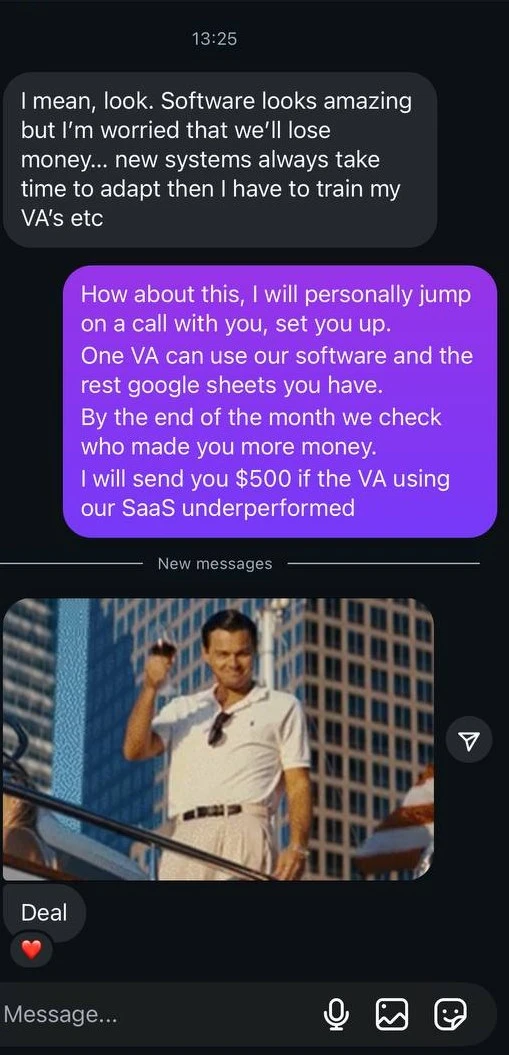
That is one exchange, pulled from an Inflowave production inbox on 15 September 2026, sample size one. It illustrates the move; it is not evidence of how often the move works. It is a message rather than a phone call, but it is the same move. The prospect did not object to price. They objected to disruption and retraining. The reply did not discount. It shrank the commitment to a single person for a single month and attached a number to the downside. Out loud it sounds like this:
"That's the right worry, honestly. So let's not do the whole thing. Run it on one [team member, client, campaign] for thirty days against how you do it now. If it doesn't beat it, we stop and I'll [specific, costly-to-you concession]."
The concession has to actually cost you something or it reads as a gimmick.
Closing a cold call: ask for the calendar, not for interest
Never end a cold call with "does that sound interesting". It invites a yes that means nothing.
The alternative close, the default
"Here's what I'd suggest. Twenty minutes, and I'll show you [specific thing] for [their company, named]. If it's not relevant in the first five you can kill it and I won't chase you. Does Thursday morning work, or is later in the week easier?"
The escape-hatch close, for reluctant prospects
"Twenty minutes on Tuesday. If five minutes in you think it's nonsense, say so and I'll hang up and never call again. Deal?"
The micro-commitment close, when a meeting is too big an ask
"Let's not book anything yet. Can I send you the one-page version, and ring you Thursday for a yes or no? If it's a no, that's a genuine no and we're done."
The diary-of-record close, for calls that never get booked
"I'll send the invite while we're on the phone so it's in your calendar before this conversation leaves your head. What's the best address?"
Send the invite during the call. The meeting booked after the call is the meeting that competes with everything else in the prospect's afternoon.
The graceful no
"Honestly it sounds like this isn't your problem right now. I'll leave you alone. If [specific trigger] ever changes, I'm [name] at [company]."
Ending a bad call cleanly is worth more than salvaging it. The trigger you name is what brings them back in six months.
Cold calling rules before you dial, which are not optional
If you are calling consumers in the United States, the Telemarketing Sales Rule governs what you have to say and when you can call. It requires prompt disclosure of the seller's identity and that the purpose of the call is to sell, prohibits calling before 8am or after 9pm, and prohibits calling any number on the National Do Not Call Registry or on that seller's own do-not-call list. The FTC publishes the compliance guidance directly (FTC: Complying with the Telemarketing Sales Rule), and the rule text is 16 CFR Part 310 (eCFR: 16 CFR Part 310), with the abusive-practices provisions including the calling-hours restriction at section 310.4 (eCFR: 16 CFR 310.4).
Practically, that means your opener has a mandatory first line, and it is better to build it into the script than to leave each rep improvising a legal disclosure. B2B calling sits differently under these rules than B2C, so confirm which one you are actually doing before you assume you are exempt. The wider picture is in what is cold calling.
Test two openers, not five
A script you never change is a script you never learn from, and the method is boring. Write two openers. Split one list. Run both for a week. Judge them on booked meetings, not on how the calls felt. Then keep the winner and write a new challenger.
Two openers is the right number because a cold list rarely produces enough connects in a week to separate five variants from noise. If you cannot reconstruct which list an opener was said to, the test is worthless before it starts, so record the filter that built the list alongside the result.
Where the script lives
Where your script lives decides whether it gets used, edited and measured, or whether it rots in a Google Doc. Prices below were checked on the vendors' own pricing pages on 15 September 2026, and they move, so check before you buy.

HubSpot Sales Hub stores scripts as playbooks, written in a rich editor with embedded questions, and recommendation rules surface the right playbook when a record matches a condition. The catch is tier: playbooks themselves require Sales Hub Professional or Enterprise, and having a playbook answer write back to a property is Enterprise only (HubSpot: Use playbooks). Custom call outcomes, which you need if your script branches on results, also require Sales Hub Professional or Enterprise (HubSpot: custom call and meeting outcomes). Sales Hub Professional is listed at $90 per seat per month on an annual commitment and $100 per seat per month month-to-month; Starter is $7 per seat per month on an annual commitment and $20 per seat per month month-to-month, and there is a free tier for up to two users, which does not include playbooks. The same page also states that Professional carries a required one-time onboarding fee of $1,500 (HubSpot Sales Hub pricing). For a five-person team that is $450 a month on the annual commitment, or $500 a month month-to-month, plus that $1,500 once, before a single call is made.
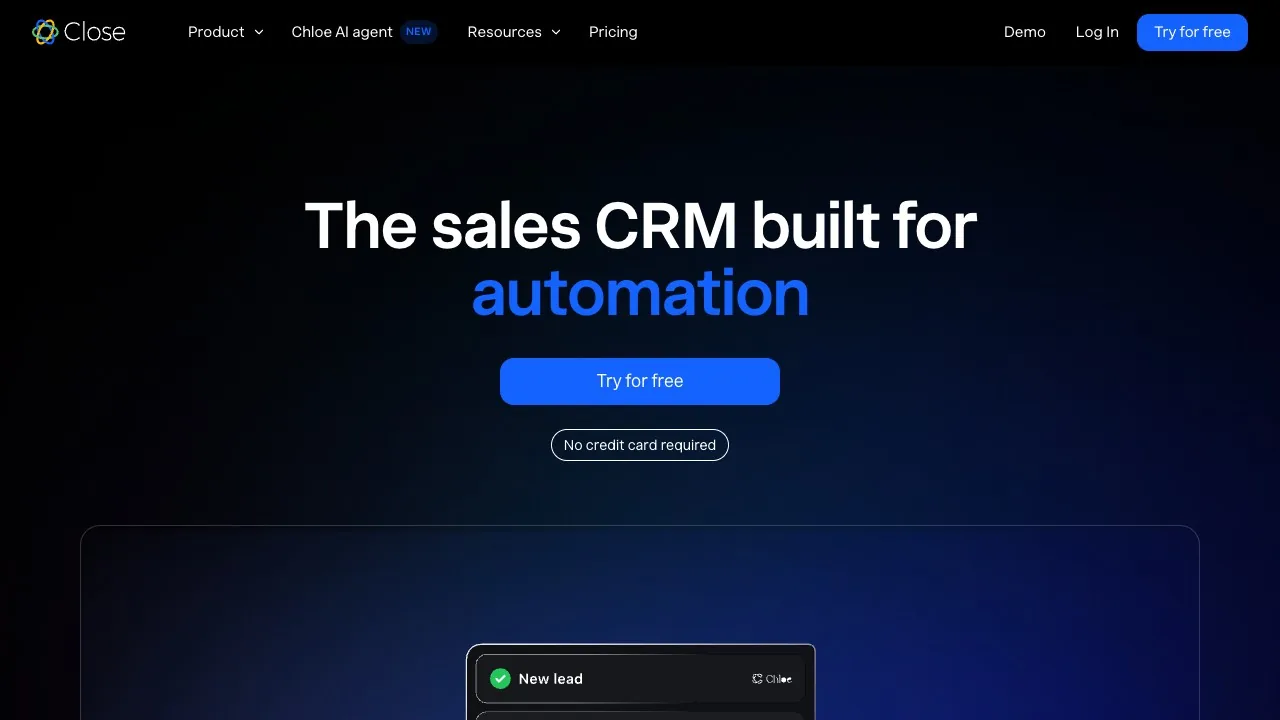
Close puts the dialer at the centre of the product. Power Dialer sits on Growth at $99 per user per month billed annually, $109 per user per month billed monthly, described on their own page as calling through a list "without touching your keyboard or mouse". Predictive Dialer arrives on Scale at $139 per user per month billed annually, $149 per user per month billed monthly. Close does start cheaper, at $9 per user per month billed annually for Solo and $35 for Essentials, but neither of those carries a dialer (Close pricing). If your business is outbound calling and nothing else, look at it seriously.

Pipedrive surprises people. Its own support documentation states that "Pipedrive doesn't have a built-in calling integration" and directs you to marketplace apps such as CloudTalk, Kixie, Aircall or CallHippo (Pipedrive: Caller). That is a product decision, not a flaw, but it means your script, your dialer and your CRM are three vendors, and the seam between them is where call outcomes go missing.

GoHighLevel includes inbound and outbound calling in its core feature set, marked on their page as carrying usage-based charges on top of the plan, at $97 a month for Starter, $297 for Unlimited and $497 for Agency Pro, or $970, $2,970 and $4,970 respectively on annual billing, which works out at roughly two months free, with a custom Enterprise tier above that. Branding the desktop web app is a general platform capability rather than a tier upgrade; what Agency Pro adds is SaaS Mode, reselling the platform as your own product with automated sub-account creation and rebilling at a markup. The white label mobile app is a separate $497 a month add-on (HighLevel pricing). Pricing is per account rather than per seat, which for a growing team is a real advantage over HubSpot and Close.
Inflowave is narrower. Scripts are stored as stages rather than as a document, and the power dialer shows the rep the current stage beside the lead record while the phone is ringing, which is why every script above is written in blocks rather than as a page. Call outcomes are a fixed vocabulary rather than free text, so two openers on the same list produce a number instead of an argument, and the result lands on the lead's pipeline stage. Plans run $27 for Influencer, $149 for Business, $297 for Pro and $497 for Max, all billed monthly (Inflowave pricing); connected social accounts and client workspaces are 1, 1, 10 and 50 respectively, team seats are 1, 1, 5 and uncapped on Max, and contacts are 2,000, 1,000, 10,000 and uncapped on Max.
When a script stops being the right tool
There is a point where the constraint is no longer the words. If your list is 40,000 records and your realistic connect rate means a human needs four months to work it once, a better script does not fix that. That is the case for handing the opener and first-round objections to an automated caller and keeping humans for conversations that convert, covered on AI cold calling. It is not the first thing to reach for. Fix the script first.
Cold calling script FAQ
What are some good scripts for phone calls?
A good phone script has three moving parts rather than a single block of text: an opener that buys attention, a problem statement that ends in a question, and a close that asks for a specific time. The opener should acknowledge the call is unexpected. The problem statement should name a symptom, not a benefit. The close should offer two times rather than asking when works.
What are the 5 stages of cold calling?
No standards body defines a canonical five, so treat any numbered list as one trainer's framing rather than a rule. That said, five stages cover what a script has to do: opener and permission, qualification, problem statement, objection handling, and close. Storing a script as stages rather than a page is what lets a rep branch at the objection instead of reading straight through.
What should I say in a cold call?
Say who you are, admit the call is unexpected, and ask for a short, capped amount of time. Then name a specific problem you see in companies like theirs and hand the call back with a question. Avoid "how are you today" and avoid describing your company for more than one sentence. If you are calling US consumers, the Telemarketing Sales Rule requires you to disclose upfront that the purpose is to sell.
What are good cold calling scripts?
The ones your reps will actually say. Read a candidate script out loud before you deploy it; anything you stumble over, a rep will stumble over under pressure. Good scripts are short, written in spoken English rather than marketing English, structured in stages so the rep can branch, and versioned so you can compare two openers on the same list and keep whichever books more meetings.
What are the biggest mistakes in cold calling?
Selling in the opener, talking for more than two sentences without asking a question, and arguing with the first objection instead of accepting it and asking one more thing. Operationally, the bigger mistakes are not logging outcomes in a fixed vocabulary, which makes improvement impossible, and giving every rep the same script forever without ever testing a second version against it.
Is cold calling still effective in 2026?
It still works, with a narrower definition of works. Volume alone is a poor strategy, so point dialers at fresh inbound and recently engaged contacts rather than at purchased lists, where the person has some reason to recognise who you are. Judge it on booked meetings per rep hour rather than on dials, and compare that honestly against the same hour spent on email or social outreach.
How to be a successful cold caller?
Consistency and review, in that order. Book the calling block, protect it, and do it at the same time daily so it stops being a decision. Then review: record calls, read your own transcripts, and look at which stage of the script people actually drop off at. Do not assume the close is the problem. Check your own drop-off stage by stage, and fix the stage your recordings actually point at rather than the one you expected.